Friday March 20, 2026
Risk planning is not a binder that sits on a shelf. For community association boards, it is an ever-present responsibility that is tested the moment something goes wrong. From increasingly severe weather to aging infrastructure and rising insurance complexity, today’s communities face a growing range of risks that demand more than a reactive response. Boards are being called to lead with foresight, coordination, and confidence when it matters most.That reality was the focus of FirstService Residential’s recent board education webinar on risk management and emergency preparedness. As the discussion made clear, emergencies are inevitable. Preparedness is not.
"Strong boards don’t just react to emergencies. They plan for them. They ask the right questions, understand their risks, and work with their management teams and partners to make sure their communities are ready."
Mathew Eberius, vice president of strategy and business operations at FirstService Residential and moderator of the webinar
Why risk looks different today
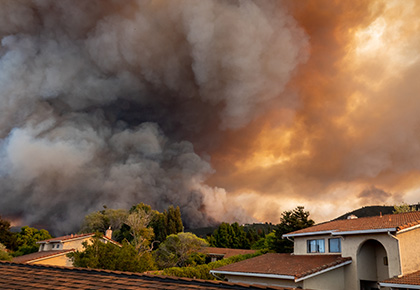 Emergency preparedness has changed significantly over the past decade. Weather events are occurring more frequently, lasting longer, and affecting regions that historically faced little exposure. At the same time, many communities are aging, increasing the likelihood of failures in plumbing, electrical systems, roofs, and drainage.
"We’re seeing storms emerge earlier and stay later each year. And we are seeing losses in areas that were not built to handle these conditions. That shift has real implications for both risk and insurance."Resident expectations have evolved as well. Boards are now expected to communicate quickly, clearly, and across multiple channels during emergencies.
Sean Gaynor, director of insurance at FirstService Financial, Inc. (FFI)
"Post-pandemic, there’s a much higher expectation for real-time communication. Whether that’s email, text alerts, apps, or social media, residents want to know what is happening, what is being done, and when they’ll hear more."
Sara Hardin, general manager of a large-scale master-planned community in California
The first steps before storm season begins
Preparation begins long before an emergency occurs. Boards should start by reviewing and updating their emergency preparedness plans, ensuring vendor contacts are accurate, response procedures are clear, and communication systems are tested and functional.Sara explains,
"Risk management means anticipating risks and reducing their impact before an event occurs. That includes maintaining infrastructure, establishing vendor response plans, and making sure communication systems are ready to support residents when it matters most."Boards should also confirm expectations with key vendors such as restoration, roofing, landscaping, and tree services. When partners already understand a community’s needs and priorities, response times improve and confusion is reduced.
Finally, boards should evaluate proactive mitigation opportunities, even when they are not immediately visible to residents. Drainage improvements, tree maintenance, and wildfire fuel reduction may not feel urgent until they suddenly are.
Sara adds:
"These types of projects may not be the most exciting, but they can significantly reduce risk and speed recovery when the worst happens."
Understanding insurance as part of preparedness
Insurance remains one of the most misunderstood aspects of risk management. Policies are more complex than ever, with multiple deductibles, special sublimits, and changing terms that can significantly affect a community’s financial exposure after a loss.Sean says,
"Understanding where the association’s responsibility ends and the unit owner’s responsibility begins is critical. There’s often a misconception that one policy covers everything, and that’s simply not the case."Boards should take time each year to understand how their policies respond to different scenarios and what has changed from prior years.
Sean adds,
"We are seeing more policies with layered deductibles and different terms by peril. If boards do not understand those changes, it becomes much harder to plan and communicate effectively with residents."Pre‑storm documentation is another critical piece. Regular inspections, maintenance records, and condition reports help establish a baseline that supports claims and reduces delays.
Sean explains,
"There is a duty to mitigate damage and a duty to document it. Communities that have aligned vendors and clear processes are far better positioned when a claim occurs."
Moving from reactive to proactive decision making
One of the most effective ways boards can shift from reactive to proactive thinking is through budgeting and reserve planning. Prioritizing projects that strengthen resilience can reduce both the likelihood and severity of future claims.Sean says,
"Planning proactively also affects insurability. When boards take steps to reduce loss exposure, that directly influences how insurers view the community over time."Technology is increasingly part of this proactive strategy. Water detection systems, automated shut‑off valves, and monitoring tools can dramatically reduce damage from leaks and system failures.
He adds,
"These controls show a real commitment to managing risk. They can turn what would have been a six‑figure loss into a much smaller claim, and insurers absolutely pay attention to that."
Clear roles make faster response possible
During an emergency, uncertainty around roles can slow response and increase frustration. Communities that define responsibilities in advance are better equipped to act decisively.Management teams typically coordinate vendors, communicate with insurers and adjusters, and manage day‑to‑day response efforts. Boards provide oversight, approve major decisions, and support resident communication.
Sara says,
"The most effective boards empower their management teams to act quickly within established authority. That clarity allows for faster response and helps residents feel more confident during stressful situations."Pre‑authorizing certain actions is essential. Boards should establish spending thresholds, designate emergency contacts, and approve vendor relationships ahead of time.
She notes,
"When communication is limited, those decisions make all the difference."
Communicating clearly when it matters most
An effective emergency communication plan is simple, consistent, and redundant. Boards and management should use multiple channels, knowing that power or cellular service may be disrupted.Sara adds,
"Even if you don’t have all the answers yet, it’s important to communicate what you do know and when the next update will come. That transparency builds trust."Boards should also remind residents that associations are not emergency management agencies.
During the webinar, Mathew notes,
"Your HOA isn’t your fire department or your city. Residents should stay signed up for official local emergency alerts and follow instructions from public safety agencies."
Lessons from real-world events
Communities that invest in mitigation consistently experience fewer complications during emergencies and recover more quickly.Sara shares,
"I have seen firsthand how proactive efforts change outcomes. In one wildfire-prone community, mitigation work was so effective that fire crews were able to stand by rather than actively defend the area."While these investments may not deliver immediate visibility, they protect community assets and support long-term stability.
She adds:
"Preparation and mitigation do matter. They absolutely change the outcome."
Turning preparation into confidence
Emergency preparedness is not about eliminating risk. It is about understanding it, planning for it, and responding with clarity and confidence.Mathew says,
"Serving on a board is both an honor and a responsibility. Communities rely on volunteer leaders to make thoughtful decisions and protect shared assets, especially during challenging moments."Boards that invest in preparation, understand their insurance, align with trusted partners, and communicate clearly are better positioned to lead when it matters most.