Monday May 11, 2026
Community emergencies test leadership at every level. Whether the threat comes from wildfires, flooding, hurricanes, or other large‑scale disruptions, the true measure of readiness is not found in policies alone, but in how effectively teams respond when conditions are at their worst.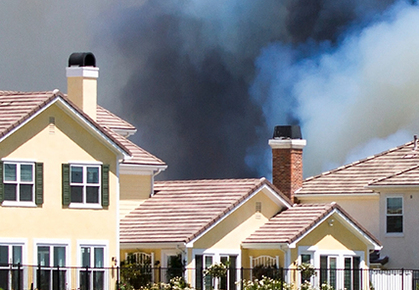 That reality was brought into sharp focus during a recent emergency response led by Erika Taylor, whose leadership during a wildfire crisis earned her the CACM Innovator Award from the California Association of Community Managers (CACM). While the award reflects a specific moment, the lessons behind it extend far beyond a single event or region.
Erika Taylor, general manager at one of our Los Angeles condominium communities, brings more than 20 years of experience in residential property management. Throughout her career, she has led complex operational improvements, reconstruction efforts, and capital improvement projects, consistently focused on efficiency, resilience, and the long‑term functionality of multi‑story buildings.
That depth of experience became especially critical when her community faced an unexpected crisis. It demonstrated how strong preparation, decisive leadership, and clear communication can make all the difference when emergencies occur.
Across the globe, community associations, homeowner associations (HOAs), and other property types face growing pressure to strengthen emergency preparedness plans. Climate events are increasing in frequency and intensity, and residents expect clarity, coordination, and confidence when emergencies occur.
When community emergencies strike, leadership must choose action
Reflecting on the moment the crisis began, Erika Taylor explains the reality many leaders face when disaster hits."When the Palisades fires hit, we had a choice. It was to react or leave."
—Erika Taylor, general manager
That choice is universal. Wildfires in the western United States, hurricanes along the Atlantic and Gulf Coasts, flooding in low‑lying and urban areas, and extreme weather events worldwide all force community leaders to decide whether they are prepared to lead through disruption. Reactive approaches often fall short during fast‑moving emergencies. Effective community emergency preparedness requires planning that anticipates uncertainty and empowers teams to act decisively when conditions change.
For homeowner associations and managed communities, this means having an HOA emergency preparedness plan that is actionable, scalable, and flexible enough to respond in real time.
Building a multi‑tiered emergency preparedness plan for communities and HOAs
Erika Taylor credits success during the crisis to layered planning and coordination.She says:
"We built a multi-tiered recovery strategy, coordinated with emergency responders, and created real-time communication systems so that residents were never left in the dark."This approach reflects best practices for a comprehensive HOA emergency preparedness plan. A single document or checklist is rarely sufficient.
Instead, communities benefit from multi‑tiered strategies that address:
- Immediate emergency response
- Ongoing operations during the crisis
- Resident communication and engagement
- Post‑event recovery and rebuilding
What remains constant is the need for preparation that goes beyond compliance and focuses on people. Residents rely on clear guidance, timely updates, and leadership that remains visible throughout the event.
The critical role of communication during a community disaster
Real-time communication emerged as one of the most impactful elements of the emergency response.During a community disaster, uncertainty fuels fear. Without reliable information, residents may turn to speculation or incomplete sources. Communication systems that deliver accurate updates quickly help mitigate confusion and build trust.
For managed communities and buildings, this reinforces the importance of communication channels that are already familiar to residents before emergencies occur. Text alerts, email updates, resident portals, and on-site messaging all play a role in a well‑executed emergency preparedness plan.
When communication is proactive rather than reactive, communities shift from managing panic to enabling informed decision‑making.
Teamwork and organizational support during emergencies
Taylor is clear that leadership alone is not enough.She adds,
"Without our team, without FirstService Residential, without Daniel Carvo, we would not have had the ability to do this."Emergency preparedness depends on collaboration across property teams, regional leadership, vendors, and emergency responders. No single role or department can manage a crisis independently, particularly when events stretch over days or weeks.
"With FirstService Residential behind us, we had the tools and the team to deliver."For HOAs and managed communities worldwide, this underscores the value of strong operational support and aligned partners. Access to resources, expertise, and scalable systems allows communities to sustain response efforts without burnout or breakdowns in service.
Want to be part of a team like this?
Moments like these are why our people make the difference. If you're looking for a career where your leadership, resourcefulness, and care for others can genuinely change outcomes for the communities you serve, we want to hear from you. Explore open roles and join a team built to show up when it matters most.Emergency preparedness as a continuous operation
The intensity of the response left a lasting impression."It was a 24-hour, seven-day-a-week situation, and it really taught me and my team that crisis is just an opportunity in disguise."While no community welcomes disaster, moments of crisis often reveal strengths that routine operations never test. Teams develop new skills, communication improves, and processes are refined under real conditions.
For organizations committed to improvement, these experiences become valuable inputs for enhancing emergency preparedness plans long after the immediate threat has passed.
Globally, communities that treat emergency response as a learning opportunity are better positioned to strengthen resilience over time.
Expanding preparedness beyond wildfires to floods and hurricanes
Although the recognition stemmed from wildfire response, the principles apply broadly across disaster types. Flooding and hurricanes present growing risks worldwide, particularly as seasonal storm activity increases.An effective HOA emergency preparedness plan should consider:
- Flood mitigation and water intrusion response
- Hurricane readiness, including wind damage and evacuation planning
- Power outage contingencies
- Safety protocols for residents and staff
The same leadership principles—communication, coordination, and preparedness—remain consistent across all emergencies.
Innovation shaped by adversity
Recognition from the California Association of Community Managers highlights a broader truth about leadership."Being recognized as an Innovator Award winner means the industry sees what I’ve always believed, that innovative leadership isn’t always born in the easy moments."Innovation is often associated with new technology or systems. In emergency preparedness, innovation also includes how leaders think, communicate, and make decisions under pressure.
The award reflects not just operational success, but an approach to leadership that values adaptability, accountability, and collaboration when it matters most.
Strengthening global communities through preparedness
Emergency preparedness is ultimately about people. Beyond protecting physical assets, it preserves well‑being, trust, and continuity for residents who depend on their communities during uncertain times.Communities with strong emergency preparedness plans benefit from:
- Greater resident confidence during crises
- More efficient coordination with emergency responders
- Faster recovery timelines
- Reduced long‑term disruption
Turning crisis into community
Looking ahead, Erika Taylor emphasizes the importance of carrying these lessons forward."We’re going to continue to turn crisis into community every time."Crisis moments often define how residents remember their community leaders. When emergencies are handled with transparency, preparedness, and care, they can strengthen bonds rather than weaken them.
As wildfires, floods, hurricanes, and other disasters continue to shape communities globally, strong leadership and comprehensive HOA emergency preparedness plans will remain essential. By investing in preparation, communication, and collaboration, communities can face the future with greater resilience and confidence.
Contact us today to learn more.
This information is provided for general informational purposes only and is not intended to constitute, and should not be relied upon as, legal, regulatory, financial, or operational advice, or as a representation or guarantee of any specific services, capabilities, or outcomes. Property management needs, regulatory requirements, market conditions, and available services vary by jurisdiction, property type, and community. FirstService Residential provides services through locally based affiliates and associates, and services and results may vary by community, region, contractual terms, and applicable law.