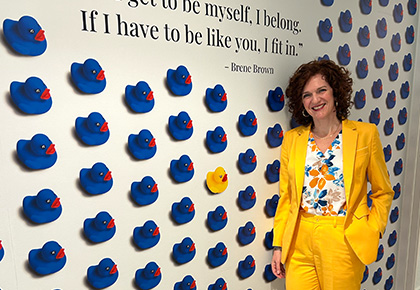
 Look closely, and beneath that rhythm lies the steady hand of a person rarely in the spotlight yet responsible for nearly everything that makes the community feel livable: the community manager.
At FirstService Residential, North America’s leading residential property management company, community managers are the connective tissue binding these neighborhoods and buildings together. They are at once the problem solver, the diplomat, the business mind, the operations strategist, the historian of a community’s unwritten rules, and the anchor for residents and board members alike.
“It’s a fast‑paced, ever‑changing job day to day, and the team provides constant support,”
says J.B., Community Manager for an HOA in Blue Bell, Pennsylvania, recalling mornings that begin with urgent questions and evenings that wrap with assurance that everything is on track.
“The ability to bounce ideas off each other makes working through issues very easy.”
It’s a snapshot of how community managers navigate a landscape defined not only by tasks but by human nuance.
Understanding the work behind the title
To outsiders, the job may appear deceptively simple: answer questions, organize repairs, run meetings. But behind the scenes, the role is far richer and more complex.
A community manager is the steward of the community or high-rise’s wellbeing. They handle financial planning, maintenance oversight, capital projects, resident communication, and the delicate interpretation of governing documents - those dense bylaws and CC&Rs that shape how a community operates. They anticipate issues long before they become emergencies and maintain a calm center even when emotions run high.
Most significantly, they serve as the professional guide to the board of directors, the elected resident volunteers responsible for governance. Property management companies like FirstService Residential ensure boards have the information they need to lead wisely, and community managers help them navigate budgets, legal requirements, community expectations, and the long‑term vision that holds everything together.
This board-manager relationship is the engine of a stable HOA, condominium, cooperative, or strata. Without it, communities and high-rises drift. With it, they thrive.
And yet, even the most capable community manager is never expected to do it alone.
The network behind every great manager
At FirstService Residential, community managers work within a deeply resourced support ecosystem. It’s part of what distinguishes the company in a crowded industry: the belief that while community managers handle the daily life of their communities and high-rises, they should be backed by specialists who can step in wherever needed.
Those specialists include financial professionals who prepare budgets and reports, insurance advisors who manage risk, project managers for construction and capital improvements, regional leaders who provide guidance and oversight, and a 24/7 Customer Care team that helps field questions around the clock.
“FirstService supports managers with essential tools to streamline and assist, and leadership that understands the struggles,”
says C.L., who manages a master‑planned community in Cedar Knolls, New Jersey. It’s a nod to a truth community managers know well: the job demands agility and emotional intelligence, but it doesn’t mean solitude.
The combination of local knowledge and national scale allows FirstService managers to stay focused on what matters most: helping residents feel at home, guiding boards with confidence, and maintaining the sense of order that makes a property feel safe, functional, and even proud of itself.
How people find their way into the profession
Community management doesn’t often appear on college career lists. People find their way into the field from hospitality, real estate, finance, customer service, construction management, and sometimes through sheer serendipity - spotting a job posting or stepping into an assistant role and discovering that they’re unexpectedly good at the blend of structure and unpredictability.
There is no single path, but there are clear steps and milestones. In several states, such as Florida, managers must hold a Community Association Manager (CAM) license to oversee an HOA or condominium. Many choose to pursue additional certifications - CPM®, ARM®, RMP®, among others - especially as they grow into larger or more complex communities.
FirstService Residential invests heavily in its managers’ development. From onboarding to continuous professional education, leadership coaching, and career mobility across markets, the company takes a long‑term view of the people who represent its brand daily. Managers quickly learn they are not just maintaining properties - they are shaping experiences.
The path upward
Unlike many corporate fields where progression requires years of gatekeeping, community management allows for upward mobility. A coordinator or on‑site associate can rise to assistant manager, then community manager, then to regional leadership in just a few years.
“An amazing workplace culture… I have learned techniques to improve my skills,”
says M.R., a property manager for a Chicago condominium, highlighting how the profession rewards initiative and curiosity.
For those who stay the course, the horizon broadens: overseeing portfolios, leading markets, influencing policy, and even shaping multi‑state operations.
It’s a career built on momentum; and in an industry growing year over year, momentum is easy to find.
“In our organization, community managers find a workplace built on collaboration and support, designed to help them develop skills and advance their careers. We believe in fostering teamwork, encouraging innovation, and providing ongoing professional development.”
- Lupe Mujica, Chief People Officer, FirstService Residential
Life inside the role: The beautiful, unpredictable rhythm
Spend a day shadowing a community manager and you’ll witness an entire microcosm of life. Residents with long memories and strong opinions. Vendors hauling ladders and equipment. Board members preparing for their monthly meeting. Deliveries piling up. Pool maintenance. Fitness center equipment. Fire panel alerts.
It’s never the same day twice.
A manager might start with a walk‑through of the property at sunrise, review financials mid‑morning, negotiate a vendor contract after lunch, mediate a neighbor dispute by late afternoon, and oversee a board meeting that stretches into the evening.
This is not quiet desk work; it is a role grounded in movement, judgment, and presence. It demands a blend of empathy, clarity, and organizational thinking that few professions require in this exact combination.
But it’s precisely this variety that keeps many managers in the field for decades. They see the impact of their work not in abstract metrics, but in how a community or high-rise feels when it’s running well.
Why this career matters more than ever
Residential communities and high-rises continue to grow across North America, and with that growth comes complexity. Buildings age. Infrastructure evolves. Resident expectations rise. Amenities multiply. Legal requirements expand. And through it all, the human need for connection and stability remains.
Community managers sit at the center of this ecosystem: part operational leader, part cultural steward. They make decisions that shape whether a community or high-rise feels cohesive or combative, efficient or chaotic, cared for or overlooked.
It’s a role that requires resilience and creativity. But for those who step into it, it offers meaning as much as momentum.
“Absolutely amazing company,”
A.M., a Chicago property manager, shared.
“Good pay, good benefits, and a close-knit group of people… you will feel valued.”
And at its core, that is what this profession ultimately provides: a chance to make life better for thousands of people, one community and high-rise at a time.
A final note
A career in community or property management isn’t simply about rules, routines, or operations. It’s about people - their homes, their safety, their sense of belonging. It’s about shaping environments where daily life unfolds smoothly, even when no one sees the work happening behind the scenes.
With the support and scale of FirstService Residential, community managers are not only prepared to handle the complexity - they are empowered to lead it.
Interested in starting your career with FirstService Residential? Explore our open roles here.
This information is provided for general informational purposes only and is not intended to constitute, and should not be relied upon as, legal, regulatory, financial, or operational advice, or as a representation or guarantee of any specific services, capabilities, or outcomes. Property management needs, regulatory requirements, market conditions, and available services vary by jurisdiction, property type, and community. FirstService Residential provides services through locally based affiliates and associates, and services and results may vary by community, region, contractual terms, and applicable law.