Thursday October 15, 2026
High-rise building insurance: Expert insights from John Lee
 High-rise communities demand insurance solutions that match the elevated lifestyle their residents enjoy. From rooftop pools and fitness centers to concierge services and shared social spaces, these communities rely on tailored coverage that protects both amenities and the unique dynamics of vertical living. After several difficult years, the insurance market is finally giving many boards room to breathe.
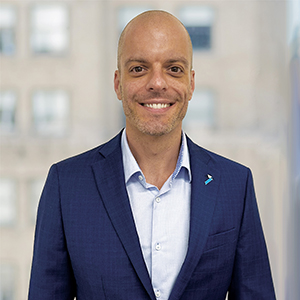
We sat down with John Lee, senior vice president at FirstService Financial, to discuss what's changed, what hasn't, and how boards can position their high-rise to take full advantage.
Q: How would you describe where the high-rise insurance market stands today?
"We're finally seeing real recovery. For much of 2020-2025, high-rise communities operated in a hard market: insurers pulled back from coastal and catastrophe-exposed states, capacity shrank, and premiums climbed sharply, sometimes two or three times over.
Buildings with high insured values often found they could only secure a fraction of the coverage they needed, at a steep price. That cycle has reversed, or is showing clear signs of reversal. Many carriers have re-entered the market, capacity has generally expanded, and competition among insurers has pushed property premiums down.
Many high-rise communities are seeing their lowest property rates in years, and brokers have some real leverage to negotiate adjustments and deviations on premium and coverage terms, something that was nearly impossible to ask for just a few years ago.
Terms and conditions are typically improving as well, so boards and managers of buildings that have proactively minimized risk should be reviewing policy terms as closely as premium dollars this renewal season."
John Lee, senior vice president at FirstService Financial
Q: Beyond a softer market, what else influences what a building pays?
"It is critical to understand how underwriters actually evaluate buildings, and a softer market is only part of the story. Previous claims activity, outstanding carrier recommendations, and COPE (a framework underwriters use to examine a building's property risk, which stands for Construction, Occupancy, Protection, and Exposure) all continue to shape pricing."
Q: Water damage is consistently the top source of high-rise claims. How should boards approach that with their insurer?

"This is one of the most valuable stories a building’s board can tell its insurer. Loss history alone doesn't show the full picture. What changes the conversation is documentation: pressure testing, leak detection technology, and a clear record of the steps taken to reduce future losses.
Insurers may not always ask for this information directly, so it falls to the association and its broker to present it proactively. Doing so not only supports better pricing today, it becomes a genuine negotiating asset the next time the market hardens."
Q: How does catastrophe exposure differ across regions?
"Risk, and the cost of insuring against it, still differs significantly by region and peril. Earthquake coverage remains a limited, specialized market with only a handful of carriers nationally, offering policies at very high premiums — and it isn't mandated for high-rise communities, even in earthquake-prone states.
Full limits are often financially out of reach for large buildings. For associations exploring options, individual unit owners may actually have easier access to broader, higher-limit policies than the association-level coverage typically allows, which can be a more cost-effective way to extend protection.
On the mitigation side, seismic gas and water shutoff valves are now standard in newer West Coast high-rises, though their protection is limited; they reduce certain risks but can't prevent all damage from a significant event. In coastal markets and in Tornado Alley, the calculus is different again.
Insurers price these regions based on the likelihood that a major storm will eventually occur, not if, which keeps wind and named-storm coverage comparatively expensive even as the broader market softens."
Q: Is every line of coverage moving in the same direction?
"No, and that's an important distinction for boards to understand. While we're seeing property premiums decline in many circumstances, liability coverage, including general liability, D&O, and particularly umbrella policies, hasn't followed the same trend, and in some cases continues to rise. Boards should budget for this line independently rather than assuming property-market softening will extend to liability coverage."
Q: What should boards know about umbrella coverage specifically?
"It deserves particular attention. An umbrella policy extends protection beyond liability coverage limits, and in the U.S., it's increasingly viewed not as optional, but as a baseline expectation for responsibly managed communities.
Standard general liability limits in the U.S., often $1 million, were established decades ago and haven't kept pace with the cost of claims or litigation today, which is why umbrella policies are critical to a building's overall coverage. In Canada, standard general limits have increased to provide sufficient coverage on their own, making umbrella policies practically unnecessary there."
Q: Beyond this budget season, what should boards be doing right now to prepare for the future when it comes to insurance?
"Use this time well, because this is a cycle, not a permanent shift. The same market that is softening can harden again, and often quickly. High-rise communities that use this period to strengthen their risk profile, rather than simply enjoying lower premiums and favorable terms, will be far better positioned when conditions tighten.
That starts with the fundamentals that have always mattered to underwriters: roof condition and age, window and opening protections, up-to-date inspections and repairs, and documented capital improvements. Carriers continue to reward buildings that can demonstrate this kind of proactive investment with more favorable terms and broader access to coverage."
Q: What's your advice for boards heading into this renewal season and beyond?
"The improved market conditions are real, but they reward preparation as much as opportunity. The most effective approach remains an annual one: work with your agent, broker, and appraisers to reassess the building's risk profile and insurance strategy each renewal cycle, since market conditions can shift from one quarter to the next.
Securing coverage that's both effective and affordable requires more than a policy; it demands ongoing partnership with insurance professionals who understand the unique needs of high-rise communities, like our FirstService Financial team, and who maintain strong relationships with underwriters. With the right guidance and documentation in place, your community can take full advantage of today's market while staying prepared for whatever comes next."
"Effective coverage starts with a board and a trusted team that understand the evolving needs of high-rise communities."Contact us to learn more about how FirstService Financial can support your building’s financial well-being.
John Lee, senior vice president at FirstService Financial
To learn more about how FirstService Residential can support your high-rise building, contact a member of our team.
This information is provided for general informational purposes only and is not intended to constitute, and should not be relied upon as, legal, regulatory, financial, or operational advice, or as a representation or guarantee of any specific services, capabilities, or outcomes. Property management needs, regulatory requirements, market conditions, and available services vary by jurisdiction, property type, and community. FirstService Residential provides services through locally based affiliates and associates, and services and results may vary by community, region, contractual terms, and applicable law.