Thursday July 30, 2026
Why condo communities need an EV charging plan
With electric vehicles (EVs) quickly rising in popularity, a thoughtful EV charging condo plan gives the community a clear path forward. According to the International Energy Agency, global electric car sales grew by 20% in 2025 to exceed 20 million vehicles, accounting for one-quarter of all new cars sold worldwide.The growing push for energy conservation and efficiency means your community must prepare for increased requests for condo EV charging stations and energy consumption on the property. While many luxury, high-rise condos already incorporate electric charging stations on their property, some communities don’t even have electrical outlets near parking spaces, let alone dedicated circuits and conduits running through them.
These charging requirements may create challenges in navigating infrastructure requirements, legal implications, management concerns, and even aesthetics.
Types of EV chargers for condos
The right charger depends on how long vehicles are parked, how much power the building can provide, and whether the station will be assigned or shared.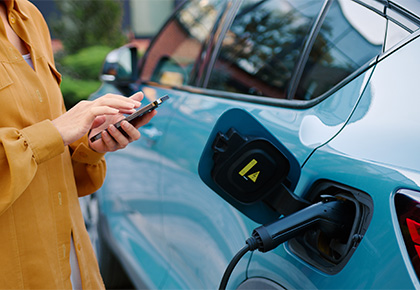
- Level 1 chargers: These use a standard 120-volt outlet and provide the slowest charging. They may work for residents with short daily drives or vehicles parked for long periods. Equipment and installation are usually less expensive, but each outlet still needs a safe, dedicated electrical setup.
- Low-power Level 2 chargers: These use a 208- or 240-volt connection while drawing less power than a full-output Level 2 charger. They can be a good fit for overnight charging and may allow the building to support more vehicles with its existing capacity.
- Standard Level 2 chargers: These are the most common choice for an EV charging condo project. They provide faster overnight charging and can serve assigned spaces or shared stations. Equipment may be basic or networked.
- Networked Level 2 chargers: These connect to software that can control access, track energy use, collect payments, schedule charging, and support load management. They are helpful for shared stations but may carry ongoing fees.
- DC fast chargers: These provide much faster charging but require significantly more power and cost. They are rarely the first choice for residential garages because residents usually park long enough for Level 1 or Level 2 charging.
How much does it cost to install EV charging in a condo?
There is no standard price for an EV charging condo project, but boards should budget for:- Charging equipment: About $500 to $4,000 per Level 2 port. Networked, dual-port, or pedestal chargers generally cost more than basic wall-mounted units.
- Electrical installation: About $1,000 to $3,000 per port for simpler projects. Long cable runs, difficult parking locations, or work through finished areas can increase the price.
- Engineering and feasibility studies: Often several thousand dollars, depending on the building and project size. This may include load calculations, site plans, equipment recommendations, and future expansion planning.
- Panels, transformers, or utility upgrades: Costs vary widely and can become the largest part of the project. Major service upgrades may add tens of thousands of dollars or more.
- Trenching, concrete, and restoration: Cutting pavement, drilling through walls, installing conduit, and repairing surfaces can add substantial labor and material costs.
- Permits and inspections: Fees depend on the local jurisdiction and the type of work involved.
- Maintenance and repairs: Boards should plan for warranties, service visits, replacement parts, and eventual equipment replacement.
Incentives can help lower costs
In the United States, boards can review state and utility programs such as Charge Ready NY 2.0 and California’s Communities in Charge program. In Canada, examples include BC Hydro’s apartment and condo EV charging rebates and Quebec’s Écorecharge financial assistance for charging stations.Program funding, eligibility, and deadlines change, and some require approval before equipment is purchased or work begins. Boards should check the current terms early and ask their tax or financial professionals whether a credit or rebate applies to the association.
How can your community implement condo EV charging stations?
-
Navigate your stakeholders
When you’re making parking changes, there are many parties who’ll need to weigh in. In addition to the EV owner, consider the wants and needs of the association, the building or community management staff, the owner or landlord, other residents, the electric utility and community document requirements, and all applicable laws.
It also helps to gather information on current parking policies, electrical capacity, and overall resident interest in accommodating EVs.
Consider creating an advisory committee, and don’t be afraid to reach out to experts like a good property management company, which can pull together resources such as other communities who have completed EV infrastructure, your local power company, a qualified contractor, and more.
-
Identify who’s going to pay for the work
This is always an important question. The cost of installation when it comes to charging equipment can range from several hundred to tens of thousands of dollars... it all depends on the equipment used, permitting, conduit, panel or even service upgrades, trenching, labor, and whether or not your condo community will need landscape repair. The resident EV owners could cover these costs (this is the easiest way), or multiple unit owners and residents could pitch in for installation.
Another alternative may be for the association to pay for the major costs (engineers, upgrading service, installing shared electrical infrastructure…) and offer the EV infrastructure as a community amenity, like a pool or fitness center. You can devise other creative options to fit your community, but always check first for relevant provisions in the community documents and local laws that may affect your decision.
-
Determine who pays for the additional energy consumption
Of course, with a bunch of EVs plugged in, someone has to pay for the power. A few options for high-rise condos are…
- Institute a flat monthly user fee. However, light users may not be happy to share the financial burden of heavy users.
- The association covers the additional electricity costs. Although this may upset residents who drive conventional vehicles and don’t contribute to the higher utility costs.
- Sub-meter the electrical consumption of each EV. This is a solution that many people and associations find reasonable, but it can be tricky to pull off. It would mean the association manager or office staff must administer the charges and manage the billing, payments, etc., which can be very time-consuming, even with only a few EVs.
- Implement an automatic charging accounting system or hire a service provider. While these solutions would incur added administration fees, they allow each user to pay for their energy use while freeing up the management staff to focus on property operations.
- Institute a flat monthly user fee. However, light users may not be happy to share the financial burden of heavy users.
-
Account for capacity and equipment
Allowing a trusted electrical engineer, electrician, and utility representative to review the existing service, transformers, panels, conductors, and other charging infrastructure is imperative — in fact, it should ideally be done before any residents purchase an EV.
Installing a single 120V slow charger for an EV may be a simple solution, but it becomes much different when the requirement is for dozens of 208- or 240-volt Level 2 chargers. Other considerations, like what types of charging stations your association allows, should be kept in mind.
-
Change assigned parking if you need to — and can
Because of the limitations of electrical infrastructure, you may need to swap residents’ parking spaces a bit. Understandably, this may be resisted by residents who perceive their proposed new space as a downgrade, but open communication can help minimize hard feelings.
The reality is that it will be much cheaper if EV charging spaces are located closer to the electrical panel. Alternatively, you can implement shared spaces for charging equipment (just be sure to formalize a shared-use policy so residents don’t monopolize the spaces) or proactively wire the majority of the parking garage to anticipate this need.
-
Choose the right contractor
This is an important project, and you’ll want it to go smoothly. Seek a licensed, bonded contractor with experience in EV charging infrastructure. Confirm that they pull all necessary permits and handle all required inspections. If you need help locating a contractor, a good property management company can make a referral.
How professional management can support an EV charging project
An EV charging condo project can involve many people and moving parts. A professional management team can help gather resident feedback and organize proposals. The manager can also coordinate site visits and keep the board informed about timelines. Working alongside engineers, contractors, utilities, insurance advisers, and legal counsel, management helps the board keep the project moving without losing sight of daily community needs.By partnering with a professional management company like FirstService Residential, you gain exclusive access to our affiliate companies FirstService Energy and FirstService Financial, who can guide your community through the process.
About FirstService Residential
As North America’s leading community association management company, FirstService Residential supports boards with local expertise backed by national resources. Our teams help communities plan capital projects, manage vendor relationships, communicate with residents, and keep financial and operational records organized.We work alongside board members as they consider changing needs, including EV charging condo requests and larger infrastructure plans. To learn how we can support your association, contact FirstService Residential today.
This information is provided for general informational purposes only and is not intended to constitute, and should not be relied upon as, legal, regulatory, financial, or operational advice, or as a representation or guarantee of any specific services, capabilities, or outcomes. Property management needs, regulatory requirements, market conditions, and available services vary by jurisdiction, property type, and community. FirstService Residential provides services through locally based affiliates and associates, and services and results may vary by community, region, contractual terms, and applicable law.