Monday October 06, 2025
Master-planned communities represent some of the most complex and desirable residential environments in North America. These large-scale developments, often functioning like small cities, require a sophisticated approach to governance and operations. A central question for the boards that oversee these communities is how to best structure their management: should the master association and its various sub-associations work with one unified management company or several different ones?The decision has significant implications for everything from financial efficiency and policy consistency to the overall resident experience.
While having multiple management companies might seem to offer specialized focus, the benefits of a single, integrated management partner often provide a more streamlined, cost-effective, and harmonious living environment for the entire community.
Overview on master-planned communities
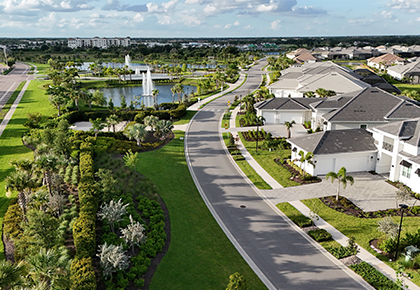 Master-planned communities are large-scale residential developments built around a comprehensive plan that integrates diverse housing types with a rich array of amenities. These can include parks, pools, clubhouses, fitness centers, trails, and even commercial spaces like shops and restaurants. Their large size and complexity distinguish them from typical subdivisions.
The primary goal of these communities is to create a cohesive and convenient lifestyle where residents can live, work, and play. The thoughtful design and high-quality amenities are meant to foster a strong sense of community and enhance property values. However, managing these intricate environments presents unique challenges that require specialized expertise.
Master and sub-associations
The governance structure of a master-planned community is often layered. At the top is the master association, which is responsible for the overall community, including all common areas and shared amenities. Its board of directors sets the vision, manages the master budget, and promotes that the community's foundational standards are upheld.Beneath the master association are often one or more sub-associations. These represent smaller, distinct neighborhoods within the larger community, such as a cluster of townhomes, a condominium building, or a specific single-family home village. Each sub-association has its own board and is responsible for managing its own unique common areas, budget, and governing documents. This structure allows for more localized control while still benefiting from the larger community's resources.
Should master and sub-associations have different management companies?
When a master-planned community is first developed, the developer typically hires one management company to oversee all operations. As control transitions to residents, individual sub-associations sometimes choose to hire their own separate management companies. The belief is that a different company might offer a lower price or more specialized attention.However, this fragmented approach often creates more problems than it solves. Having multiple management companies operating within one community can lead to a host of inefficiencies and conflicts. These include:
- Inconsistent policies and enforcement: Different management companies may interpret and enforce rules differently, leading to confusion and frustration among residents. One company might be strict about parking rules, while another is lenient, creating a perception of unfairness.
- Communication breakdowns: Coordinating between multiple management teams can be cumbersome. Important information may not flow smoothly between the master association and its sub-associations, resulting in a disconnected resident experience.
- Financial inefficiencies: Each management company has its own set of administrative costs. Consolidating management can reduce this overhead. Furthermore, a single, larger management partner can leverage its scale to negotiate better rates with vendors for services like landscaping, security, and insurance, benefiting all associations.
- Conflicting maintenance schedules: Imagine one company’s landscapers arriving on Monday and another’s on Tuesday. Multiple vendors for the same service create unnecessary disruption, noise, and traffic within the community.
Benefits of one management company for all master-planned needs
Consolidating to a single property management company for both the master and sub-associations offers significant advantages. A unified approach fosters consistency, efficiency, and a stronger sense of one cohesive community.The key benefits include:
- Consistent service and rule enforcement: With one company, all residents receive the same high level of service and can expect rules to be applied uniformly across the entire community, regardless of which sub-association they live in.
- Streamlined communication: A single management team creates a central point of contact. This simplifies communication for boards and residents, helping that everyone is on the same page.
- Cost savings through economies of scale: A single provider can negotiate bulk contracts with vendors, securing better pricing that benefits every association. This collective buying power can lead to substantial savings on major expenses.
- Improved vendor management: Coordinating services becomes much simpler with one management partner. This results in more efficient maintenance schedules and higher-quality work from vendors who value the larger contract.
- Simplified financial management: Having one company handle financials for all associations simplifies accounting, billing, and financial reporting, providing greater transparency for all board members.
- Enhanced community culture: A unified management team is better positioned to support a cohesive community culture, promoting events and initiatives that bring all residents together.
How to switch to one property management company
Transitioning all associations within a master-planned community to a single management company requires a coordinated effort. The process typically begins when board members from the master and sub-associations recognize the inefficiencies of the fragmented model.- Form a committee: Interested board members from the various associations can form a committee to explore the possibility of consolidation.
- Define requirements: The committee should work together to create a single Request for Proposal (RFP) that outlines the needs and expectations of all participating associations.
- Interview candidates: The committee can then interview potential management companies that have proven experience in managing large, multi-layered communities.
- Make a collective decision: After a thorough review, the committee can recommend a single company. Each individual board then votes on the decision. While unanimous agreement is ideal, a majority of associations moving to one provider can still generate significant benefits.
The value of one management company for master-planned communities
A single, experienced property management company brings more than just operational efficiency, as the right company understands the nuances of master association management and can provide the guidance boards need to navigate complex challenges. Mark Pacheco, community manager at premier master-planned community Pecan Square advises that boards should "Listen to the management company and partner with them. They are the boots on the ground and hear what resident's are needing."A unified management partner is better equipped to help boards plan for the future. Vice President of Lifestyle and Developer Services at FirstService Residential Raymond Tate, highlights a common issue:
"Boards aren’t realizing the potential cost savings of shopping their account due to the incremental rise in premiums each year. A single, dedicated management firm with strong financial expertise can proactively seek competitive bids for major contracts like insurance, delivering substantial value to the entire community."Leaders in the industry also emphasize how unified management enhances community operations. As General Manager at Ladera Ranch, Ken Gibson, mentions:
Raymond Tate, vice president of lifestyle and developer services at FirstService Residential
"You have these neighborhoods that are connected through the programming, through that engagement, through the activation of all these amenities that you see in these large-scale, master-planned communities. This cohesion enables more effective community strategy and programming."Additionally, Vice President of Community Solutions for FirstService Residential’s South region, Landy Labadie, noted:
Ken Gibson, general manager at Ladera Ranch
"If you have food and beverage, you're receiving thousands of invoices a week. So we have experts in finances to, and accounting to really understand what that volume of invoices means. Human resources plays a huge role in these communities."With one company overseeing all facets, boards and residents benefit from streamlined financial oversight and specialized expertise in every operational area.
Landy Labadie, vice president of community solutions for FirstService Residential’s South region
President for FirstService Residential’s Arizona market, Shane Gillaspie also points out,
"Our local teams [at FirstService Residential] are supported by our regional directors or vice presidents all the way up through... our job is really to train and develop and create a culture that they can thrive in. Because we know that one of the biggest causes of instability is manager turnover, team turnover."A single, cohesive company supports long-term stability and consistent service by investing in staffing and leadership development.
Shane Gillaspie, president for FirstService Residential’s Arizona market
Making informed decisions with industry expertise
For boards governing master-planned communities, access to comprehensive data and industry expertise is essential for making informed decisions about management structures, budgeting, and long-term strategic planning. Understanding the operational and financial benchmarks of similar communities provides an invaluable tool for evaluation and improvement.Watch expert panel discussion on master-planned community trends
Watch this comprehensive panel discussion featuring FirstService Residential’s team of industry experts who share insights on managing master-planned communities, from budgeting strategies to amenity programming.
Leveraging insights from BENCHMARK master-planned guide, FirstService Residential’s one-of-a-kind report analyzing operating budgets from over 400 master-planned, large-scale, and highly amenitized communities across the U.S, the panel offers key information so you can learn about the latest trends, challenges, and solutions that are shaping the future of master-planned community management.
Download your free BENCHMARK master-planned report
Access your free BENCHMARK master-planned community guide to gain valuable insights that help board members navigate rising costs, unexpected expenses, and growing resident expectations.The guide includes a detailed analysis of real operating budgets, amenity trends, staffing strategies, and financial benchmarks from master-planned communities across North America.
Download the BENCHMARK master-planned report here.
To learn more about how FirstService Residential can support your community, contact a member of our team.