Thursday October 02, 2025
The holiday season is here, and few things spark festive cheer like bringing out those treasured decorations from storage. For many, seeing familiar lights and displays year after year fosters a sense of comfort, tradition, and community.Still, it’s important to celebrate in a way that respects your rules and regulations.
What do holiday décor rules typically include?
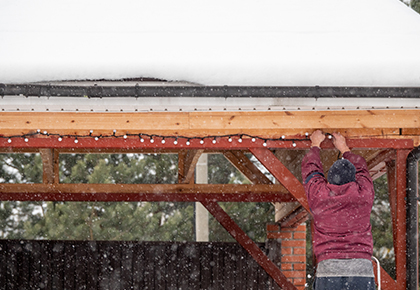 Most HOA and building décor rules include the following restrictions:
- Noise: Rules may limit the use of decorations that produce sound. This can include music-playing lights or inflatable decorations to lower disturbances to other neighbors during quiet hours.
- Size: Some HOAs and buildings regulate the dimensions of decorations, restricting oversized inflatables, large displays, or items that could obstruct common areas or pose safety hazards.
- Timing: HOAs and buildings often specify when holiday decorations can be put up and must be taken down and for how long they can be on (lights, inflatables, etc.).
- Color: Restrictions on color schemes may exist to maintain a uniform appearance, particularly in communities with aesthetic considerations.
- Etiquette: It is key that all HOAs and buildings have appropriate décor, as they typically prohibit offensive or inappropriate themes.
- Location: Restrictions can also be on where decorations can be placed, for instance, limiting displays to personal property and not allowing decorations on common areas, rooftops, or fences.
"Aesthetics, or the look of these decorations, is also important. Many of our buildings' managers encourage a uniform, elegant look in the hallways, which is why we prefer not to have decorations on the outside of doors. Additionally, it allows common areas to be safe and clutter-free."
Ashlee Friedmann, managing director of FirstService Residential's multifamily rental division
Tips for creating holiday decoration rules
So, how can you uphold those standards without dampening the holiday spirit? Try these tips to help keep the season merry, bright, and harmonious for everyone.-
Be reasonable.
Most residents are receptive to holiday décor restrictions such as the time of year it's allowed and how much can be displayed. Consider surveying residents to learn what matters most to them. If appropriate, set a reasonable start date and end date for holiday decoration displays for the entire year. The same goes for time-of-day rules. Nobody wants holiday lights flickering in their window at three in the morning, so all neighbors need to be aware and considerate of others as well.
If you are in a high-rise, consider establishing policies about adhering decorations to the building. They can damage the property’s exterior, including the waterproofing or stucco.
The one area you want to steer clear of is restricting religious displays at any time of year. This can quickly turn into a hot-button topic that will encourage nothing but friction. Laws concerning religious displays vary widely across the nation, so if your community or building plans to institute a policy that includes them, be sure to consult with your legal representative first.
A strong property management company can help your board create and enforce fair and effective policies. Larger management companies offer an added advantage because their teams can draw on the collective experience of colleagues to share what works, what doesn’t, and where potential pitfalls may lie.
-
Apply the rules fairly.
The first step to ensuring that you are applying your rules fairly is to know the ins and outs of your governing documents. If there's an outright ban on holiday décor, make sure you implement this across all decorations or displays throughout the year; don't make exceptions.
On the other hand, if your governing documents do not prohibit them explicitly and you don't see a reason to do so, then allow reasonable décor that doesn't pose a safety risk.
Before establishing policies, survey the residents to get feedback on the proposed guidelines.
-
Remember that people’s tastes and likes differ.
We all have different likes and dislikes, and as a result, there is no universal definition of what is “tasteful.” The light display that you consider a whimsical window treatment may be seen as obnoxious by someone else; a precious family heirloom that holds great meaning for you may be viewed as an eyesore by your neighbor; the wreath your neighbor lovingly created may not appeal to everyone. To avoid unnecessary frustration, it is important to refrain from debating the aesthetics of holiday décor. Instead, focus on creating policies that are grounded in facts like size, placement, or timing rather than opinions. If your board receives substantial feedback about particular décor styles, initiate a conversation with all residents about the possibility of updating your governing documents.
-
Remember that common areas have different rules.
When it comes time to decorate the common areas, remember to keep the décor free from religious undertones or imagery. For example, using lights and wreaths is a safe way to go in winter. If your community is passionate about keeping religion in the holidays, try to have all faiths represented equally.
And it goes without saying that residents should not place holiday decorations in any area maintained by the HOA or building as it opens up danger and liability to both parties. Make sure residents know that these areas are off limits and that only the appropriate committee, the board, or management team are allowed to work on any display.
-
Communicate early and often.
Communicate any rules through a letter or website posting before each holiday so residents who decorate are reminded of the policy and can plan accordingly. Send reminders in May and September, ahead of the major summer and fall holiday seasons. Make sure new residents are informed of the policies when they move in. A quality property management company can help your board share these rules effectively and efficiently with the entire community.
To learn how FirstService Residential can support your community's vision, contact a member of our team.
Please note that in this article, we often mention HOAs, which are the most common residential community association structure across the US and Canada. And yet, these best practices should provide helpful guidance for other community types too, including condominiums, cooperatives, and strata corporations too.