Thursday June 25, 2026
What are capital improvements in Nevada?
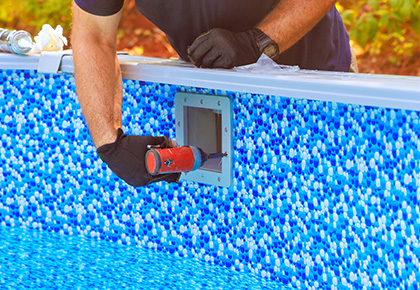 A capital improvement in Nevada is a major addition, upgrade, replacement, or restoration that improves a community asset, extends its useful life, or adds something new to the common elements.
Examples of capital improvements in Nevada
Common capital improvements in Nevada include:- Roof replacement: Replacing a full roof system on an association-maintained building.
- Road or sidewalk replacement: Restoring major community infrastructure that the association is responsible for maintaining.
- Pool renovation: Resurfacing a pool, replacing major pool equipment, or upgrading the surrounding deck.
- Gate or access system upgrades: Replacing outdated access controls with a more modern entry system.
- Landscape infrastructure: Replacing irrigation systems, improving drainage, or redesigning major common area landscaping.
- Security improvements: Installing access-control systems, cameras, or lighting in association-controlled areas.
- Energy upgrades: Adding solar, efficient lighting, or other long-term improvements to shared systems.
Repairs vs. capital improvements
A repair usually restores something to working condition, while a capital improvement project usually adds something new, replaces a major component, extends the useful life of an asset, or improves the property beyond routine maintenance. For example, patching a small roof leak is usually a repair, while replacing the full roof system may be a capital improvement project.How to pay for capital improvements
Nevada HOAs often pay for capital improvement projects through reserve funds, loans, special assessments, or a combination of funding sources.- Reserve funds: Reserve funds are generally used for repair, replacement, or restoration of existing components—not new improvements. That means it’s even more important to confirm that your reserve fund is adequately funded to pay for those projects. Unfortunately, that’s not the case for many associations.
According to FirstService Financial, up to 72% of community associations in the United States have not properly funded their reserves and may run into financial trouble because of it.
- Loans: Loans have become increasingly common for funding capital improvements in recent years, a trend that has been mirrored at FirstService Financial.
"FirstService Financial facilitates about $400 million in loans for clients annually and has closed more than $3.5 billion in loans, overseeing the entire lending process — from negotiation to closing."
Before determining if a loan is the right option for your community, consult with your association attorney and HOA manager as some governing documents require a membership vote before securing a loan.
Karla Chung, senior vice president of FirstService Financial
- Special assessments: If your reserves are insufficient to pay for what your community or building needs or the project is not outlined as a reserved item, the community will need to look for alternate sources of funding. This means potentially levying a special assessment, an additional HOA fee that helps finance the project's cost.
While a special assessment allows the community to avoid taking on debt, it is also the least popular option among homeowners. Large, unexpected assessments can create hardship for residents, who may challenge the decision or direct a lawsuit against the community for neglecting its fiduciary responsibilities.
If homeowners cannot afford the additional payments and require a payment plan, the community may need more funds to begin the project and pay it in full. Before imposing a one-time special assessment on your community, check your governing documents and consult with your legal counsel to support compliance with Nevada HOA laws.
Preventive maintenance vs. capital improvements
In contrast to capital improvements, preventive maintenance is generally less costly and performed more frequently. They are funded from your association’s operational budget under the line item “Repairs and Maintenance (R&M),” and they are meant to restore your major components (or “assets”) to their original condition or prevent them from deteriorating further.Adhering to the manufacturer's or general building contractor's recommended preventive maintenance schedule for a component significantly enhances its chances of achieving or surpassing its anticipated lifespan — that is, the duration it is expected to function as intended. By extending the useful life of a component, the period before it necessitates replacement or major repair is prolonged, resulting in cost savings for your association.
However, there are caveats.
"Sometimes, repairs to an older component can get very expensive; in fact, it may cost less to replace the component altogether. If the repairs cost about the same or are more than a replacement, you should replace the component.In some instances, maintenance jobs can turn into capital improvement projects unexpectedly. For example, roof damage could appear to require a simple repair, but further inspection might reveal that the entire roof needs to be replaced.
The new component may even be tax deductible, or you may get a tax incentive. New equipment may also come with a manufacturer’s warranty, be more energy efficient, and have a longer life expectancy."
Christopher L. Pappas, senior vice president at FirstService Residential
The role of reserve studies in your Nevada community
A reserve study allows you to plan and budget for capital improvement projects over the next 20 to 30 years. A specialist from a reserve study firm (preferably an engineer) should conduct the study, which consists of:- A physical analysis. The reserve specialist performs a site inspection to assess the condition of common area assets within your Nevada community, such as clubhouses, lobbies and pool areas. Based on this assessment, they estimate the remaining useful life and make recommendations for their repair or replacement.
- A financial analysis. After the site inspection, the reserve specialist estimates the cost for each repair or replacement as well as any additional improvements (like adding a playground or expanding the fitness center). Based on these costs and your current reserves, the reserve specialist recommends a funding plan and calculates the monthly contribution required from each homeowner.
Reserve study requirements in Nevada
Nevada law requires an association’s executive board to have a reserve study conducted at least once every 5 years (NRS 116.31152(1)(a)). The board also must review the study results at least annually to determine whether the reserves are sufficient and make any needed funding-plan adjustments (NRS 116.31152(1)(b)-(c)).About FirstService Residential
FirstService Residential supports Nevada communities with local expertise backed by national resources. Our teams help boards stay organized with governance support, recordkeeping systems, financial management, vendor coordination, resident communication, and 24/7 customer care.We help boards apply consistent processes that align with their governing documents and Nevada law, so board members can stay focused on long-term community goals instead of day-to-day administration.
Contact a member of our team today to learn more.
This information is provided for general informational purposes only and is not intended to constitute, and should not be relied upon as, legal, regulatory, financial, or operational advice, or as a representation or guarantee of any specific services, capabilities, or outcomes. Property management needs, regulatory requirements, market conditions, and available services vary by jurisdiction, property type, and community. FirstService Residential provides services through locally based affiliates and associates, and services and results may vary by community, region, contractual terms, and applicable law.