Tuesday March 31, 2026
Nevada HOA laws to know
Nevada HOA laws mainly live in NRS Chapter 116, which governs most common-interest communities (condos, townhomes, and many planned communities). These laws set baseline rules for budgets, records, enforcement, collections, and owner rights.Communities may also be governed by related laws (like manager licensing in NRS Chapter 116A) and their own recorded documents.
HOA powers
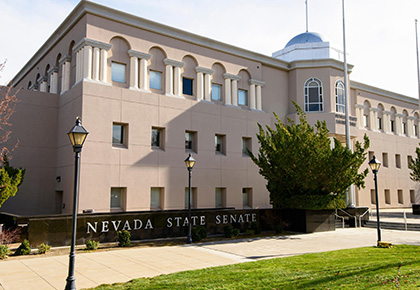 NRS 116.3102 gives associations broad operational authority, like adopting bylaws and rules, managing common elements, hiring vendors/managers, collecting assessments, and enforcing governing documents (within statutory limits).
Budgets and ratification meetings
NRS 116.31151 sets a specific budget process. The board must deliver a summary of the proposed budget to owners within 60 days after adopting it, and it must hold a budget ratification meeting 14 to 30 days after mailing the summary. Unless a majority of all owners vote to reject it at that meeting, the budget is ratified.Recordkeeping
NRS 116.31175(7) requires an association to keep its “books, records and other papers” for at least 10 years, but meeting minutes have a longer rule. Owner meeting minutes must be kept until the community is terminated under NRS 116.3108(8), and executive board meeting minutes must be kept until the community is terminated under NRS 116.31083(11).Owners cannot be charged more than $25 per hour to review records under NRS 116.31175(8). For communities with 150+ units, NRS 116.31069 requires a secure owner website/portal that includes the governing documents, budgets, and meeting notices/agendas.
Fines and enforcement
NRS 116.31031 allows fines and other sanctions only if the governing documents authorize them and the association follows due process. For violations that do not pose an imminent threat to the health, safety, or welfare of the community, fines are capped at $100 for each violation and $1,000 total per hearing. If a violation becomes a “continuing violation,” the association can impose additional fines that aren’t subject to those caps.Rules the board adopts
NRS 116.31065 sets quality standards for HOA rules. Under the statute, association rules must be reasonably related to their purpose and clear enough that an owner can understand what’s required.Rules also cannot be adopted to evade an association obligation, must be consistent with the governing documents, and cannot arbitrarily restrict conduct or require an owner to build a capital improvement that the governing documents do not require. Finally, rules must be uniformly enforced, and if they are not, that rule may become unenforceable. If the association enforces rules through fines, it must follow the fine-hearing process in NRS 116.31031.
Collections
NRS 116.310313 allows an association to charge reasonable fees for collecting past-due amounts, and those fees are set by state regulation. The rule applies whether the collection work is done by the association, the community manager, or a collection agency. “Costs of collecting” may include items such as collection fees, preparing and recording a lien, delivery charges, title or bankruptcy searches, and postage.“Obligation” is defined broadly and can include assessments, fines, construction penalties, fees, charges, and interest. For assessments more than 60 days overdue, NRS 116.3115(3) sets the interest rate at the prime rate at the largest bank in Nevada, as determined by the Commissioner of Financial Institutions, plus 2%. The rate updates every January 1 and July 1 until the balance is paid.
Recent legislative updates
SB201 (effective July 1, 2025) protects an owner’s (or resident’s) right to display religious or cultural items in the space they exclusively control — including (most commonly) an entry door or doorframe.HOAs can still set reasonable rules about where and how the item is displayed, and they can enforce basic limits like a general size cap of 36” x 12” (and the item can’t be larger than the door/doorframe). Any HOA rule in effect on July 1, 2025 that conflicts is void and unenforceable.
Key governing documents to know
- Declaration / CC&Rs: The recorded restrictions that “run with the land,” including use limits, maintenance responsibilities, and assessment authority.
- Bylaws: The association’s rulebook for board member responsibilities and how the membership operates (meetings, elections, officer roles).
- Articles of incorporation (if incorporated): The document filed with the state that legally creates the association as a corporation and defines its basic corporate powers.
- Rules and regulations: Day-to-day community rules adopted by the board under its authority.
- Policies/resolutions: Written procedures (collections, fine schedule, records requests) that make enforcement consistent.
- Architectural guidelines: The standards used for owner improvement requests.
Homeowner rights
- Records access: Owners can request many association records. If the board does not provide copies of certain required records within 21 days, the board is subject to a $25-per-day penalty until provided. (NRS 116.31175(2)–(3))
- Open meetings and owner participation: Owners can generally attend executive board meetings and speak during the designated owner-comment period, except when the board is properly in executive session. (NRS 116.31083; NRS 116.31085)
- Annual owners’ meeting and meeting minutes: Owners must have at least one owners’ meeting each year, and the association must keep minutes for owner meetings. (NRS 116.3108)
- Right to record meetings: Owners have the right to make audio recordings of owners’ meetings (subject to the statute’s rules). (NRS 116.3108(9))
- How notices must be delivered: The association must deliver required notices to the email address an owner designates, unless the owner opts out of electronic notices, in which case the association may deliver notices by hand delivery, U.S. mail, or another reasonable method. (NRS 116.31068)
- U.S. and Nevada flags: HOAs generally cannot prohibit owners from displaying the U.S. flag or Nevada flag in the areas they exclusively occupy/use, subject to conditions in the statute. (NRS 116.320)
- Political signs: HOAs generally cannot ban political signs in an owner’s exclusive-use area, but the statute sets clear limits like max size 24” x 36” and no more than one sign per candidate/party/ballot question. (NRS 116.325)
- Drought-tolerant landscaping: Owners have a protected right to install or maintain drought-tolerant landscaping, subject to reasonable conditions and limitations in the statute. (NRS 116.330)
- At least one pet (in many communities): Nevada law limits blanket “no pet” rules in many common-interest communities and sets a framework around an owner’s ability to keep at least one pet in the portion they exclusively occupy/use, with important exceptions depending on the declaration’s timing. (NRS 116.318)
- Solar rights: HOA restrictions that prohibit or unreasonably restrict a homeowner from using a solar energy system on their property are generally void and unenforceable, with the statute listing what counts as an “unreasonable restriction.” (NRS 111.239)
About FirstService Residential
FirstService Residential supports Nevada communities with local expertise backed by national resources. Our teams help boards stay organized with governance support, recordkeeping systems, financial management, vendor coordination, resident communication, and 24/7 customer care. We help boards apply consistent processes that align with their governing documents and Nevada law, so board members can stay focused on long-term community goals instead of day-to-day administration.Contact a member of our team today to learn more.
This information is provided for general informational purposes only and is not intended to constitute, and should not be relied upon as, legal, regulatory, financial, or operational advice, or as a representation or guarantee of any specific services, capabilities, or outcomes. Property management needs, regulatory requirements, market conditions, and available services vary by jurisdiction, property type, and community. FirstService Residential provides services through locally based affiliates and associates, and services and results may vary by community, region, contractual terms, and applicable law.