Tuesday May 19, 2026
In Pennsylvania, when cranes appear and a tower begins to climb, it signals not only new square footage but new expectations about where people want to live, how companies want to work, and how a city wants to position itself.From dense downtown blocks to riverfront districts being remade from former industrial land, the newest high-rises reflect a set of shared pressures: housing demand, competition for office tenants, the push for transit-friendly neighborhoods, and a growing insistence that large buildings be cleaner, safer, and more resilient than those that came before.
Pennsylvania's high-rise market: Where height is returning
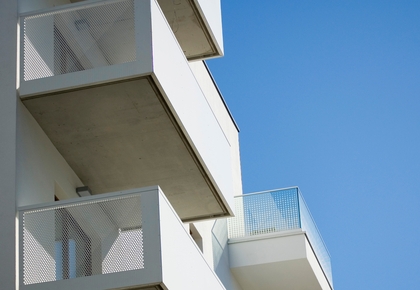 Although Philadelphia and Pittsburgh remain the state's two dominant high-rise markets, vertical development is no longer confined to a handful of traditional business districts. Neighborhoods near major rail stations, medical campuses, and universities have become focal points because of the high concentration of jobs and foot traffic, and zoning often already anticipates larger buildings.
In many places, the logic is straightforward: if land is scarce or expensive, building up can be the most efficient way to add apartments, hotel rooms, labs, or mixed-use space without expanding outward. The result is a more complex skyline pattern, clusters of height around transit and employment nodes rather than a single “center” of tall buildings.
The FirstService Residential perspective
Property management firms often see these shifts up close because they operate buildings long after the ribbon-cuttings. FirstService Residential, for example, supports high-rise condominium communities across Pennsylvania—helping boards translate a tower's promise (amenities, lifestyle, location) into reliable daily performance (staffing, systems, service standards, and long-range planning).In one community, moving from self-management to a professional property partner can bring more structure to budgeting, preventive maintenance, vendor oversight, and resident communications—while still preserving the neighborhood feel residents value.
At Beaver Hill Condominium Association in Jenkintown, for instance, amenities include a pool, fitness center, and lounge, and management partnerships have been structured to support the board’s vision, resident experience, and long-term capital planning.
What's inside today's Pennsylvania high-rises
Today's high-rise is also more likely to be a bundle of uses than a one-purpose monolith. Residential towers increasingly include street-level retail, co-working lounges, gyms, terraces, and amenity floors intended to keep residents "in the building" longer.Architecture at street level
Architecturally, the most successful towers acknowledge that the skyline is only part of the job. A high-rise also must meet the city at eye level. That is why many new projects emphasize a stronger "base " with storefronts, canopies, and materials that feel durable at the sidewalk level.Setbacks, terraces, and articulated façades can help a tall building read as several smaller volumes rather than a single slab, reducing the sense of bulk on narrow streets. In historic districts, designers may echo the proportions of older masonry buildings, without copying them, by using vertical rhythms, warm-toned cladding, or contextual detailing.
Engineering and construction realities
Behind the scenes, tall buildings in Pennsylvania come with a set of engineering realities that are easy to overlook from the street. High-rises must withstand wind forces that increase height; this affects everything from the stiffness of the structural frame to the placement of mechanical equipment.Foundations can be particularly complex in river-adjacent areas where soil conditions vary from block to block. Depending on the site, engineers may use deep piles or drilled shafts that transfer the building's load to stable layers below.
For the tower above grade, a concrete core with steel framing—or an all-concrete system—often provides the combination of strength, speed, and fire performance developers want, especially when schedules and financing demand predictable construction milestones.
High-rise operations after opening day
That operational layer is where property management becomes visible, especially in high-rises, where building systems are intensive, and expectations are high. Elevators, life-safety systems, staffing, vendor coordination, preventive maintenance schedules, package handling, resident communications, and budgeting for reserves all need to run reliably on a scale.FirstService Residential's approach is hospitality-minded, pairing day-to-day service with long-term governance and financial support for association boards.
"Strong operations can be the difference between a building that simply looks impressive and one that performs reliably for residents and boards over the long term."It is easy to miss when a tower is running smoothly, but impossible to ignore when it is not.
Arthur Bartikofsky, Senior Vice President at FirstService Residential
Sustainability and building performance
Performance standards have also risen. Tenants and residents increasingly expect healthy interiors, efficient systems, and lower operating costs, and many developers market new towers around those promises. High-performance façades with better insulation, efficient glazing, and reduced air leakage can significantly cut heating and cooling demand—important in Pennsylvania's four-season climate.Modern towers often include energy recovery ventilation, advanced controls that adjust temperature and airflow based on occupancy, and water-saving fixtures. Some projects pursue third-party certifications, while others focus on measurable outcomes such as lower energy use intensity, improved indoor air quality, or the ability to accommodate future electrification as building systems evolve.
High-rise safety and resilience
Safety requirements shape tower design in ways the public rarely sees. Fire resistance ratings, protected stairwells, smoke control, sprinklers, and compartmentalization all influence how floors are laid out and how materials are selected.Redundancy—multiple ways to exit, backup power for critical systems, and robust communications—become more important as buildings get taller, and evacuation times increase. Resilience planning is gaining attention, too, especially for properties near rivers or vulnerable infrastructure corridors.
Even when a high-rise is not directly in a floodplain, teams may design electrical rooms, generators, and other sensitive equipment with worst-case scenarios in mind to reduce downtime after extreme weather.
Community impacts
When a high-rise is unveiled, the effects ripple beyond the property line. Construction creates short-term jobs and long-term demand for roles in building management, maintenance, and service. New development can strengthen the tax base and support public improvements, such as streetscapes, lighting, parks, and transit upgrades, especially when projects include negotiated community benefits.But high-rises can also intensify familiar debates about affordability and displacement. If a tower adds luxury units without expanding the range of housing options nearby, it may accelerate rent increases in adjacent blocks.
Cities and developers have responded with a mix of approaches, from setting aside some income-restricted units to contributing to housing funds or partnering with nonprofits on separate affordable projects.
"The best high-rise projects don’t just add units—they add everyday value at street level, strengthen local services, and create a renewed sense of community for residents and the surrounding neighborhood."
Andy Sytnik, VP, Pennsylvania High Rise
Risks and roadblocks
None of this is easy—or guaranteed. High-rises are capital-intensive, and their feasibility can swing quickly with changes in interest rates, material costs, and resident demand. Supply chain disruptions can delay curtain wall delivery; labor shortages can slow interior work; and redesigns may be needed when a planned anchor tenant backs out.Public approvals can be complicated as well. Even when zoning allows a tower, community concerns about shadows, views, traffic, and neighborhood character can lead to contentious hearings, design revisions, or legal challenges. Developers often try to reduce uncertainty through phased construction, pre-leasing commitments, and conservative rent or occupancy assumptions, but tall buildings remain among the most financially sensitive projects a city can undertake.
Ultimately, Pennsylvania's next generation of high-rises will be judged less by their height than by their fit. Towers can concentrate growth in areas with existing infrastructure, support transit, and bring new residents closer to jobs and culture.
For Pennsylvania communities watching a new building rise floor by floor, the key questions are practical: What does it add to the neighborhood every day? Who gets to live or work there? And will the tower, once the construction fences come down, feel like part of Pennsylvania's cities or simply something placed on top of them?
Benefits and why high-rise towers can work in PA
When planned well, high-rises can offer something that Pennsylvania's older, built-out neighborhoods often struggle to provide new homes and workspaces without consuming more land. Concentrating growth in a smaller footprint can help cities absorb demand while protecting historic fabric and reducing pressure to sprawl outward. It can also make infrastructure investments pay off.More residents within walking distance of rail stations, bus corridors, universities, and medical campuses support transit ridership, keep retail viable, and help justify improvements to sidewalks, lighting, and public space.
Towers can also broaden a downtown's economic base. Construction spending supports local trades and suppliers, and once open, a high-rise creates ongoing jobs in operations, security, maintenance, and resident services. For municipalities, the long-term impact is often fiscal: higher assessed values and more concentrated activity that can strengthen the tax base and support city services.
At street level, the best projects contribute in everyday ways, active storefronts, lobbies that feel welcoming rather than sealed off, and public-facing spaces that make the building feel like part of the neighborhood's routine.
There are performance benefits, too. New high-rises can be built to higher standards for energy efficiency, indoor air quality, and resilience than much of the existing building stock, lowering operating costs over time and improving comfort in Pennsylvania's four-season climate.
And because towers rely on complex systems and shared amenities, strong operations matter; consistent preventive maintenance, life-safety readiness, staffing, vendor management, and reserve planning are what protect property values and resident experience long after the last crane leaves.
When a building pairs with good design with disciplined long-term property management, height becomes less of a statement and more of a dependable piece of city infrastructure.
Conclusion
Pennsylvania's high-rise boom may be most visible in new silhouettes on the horizon, but its success will be measured in the less-photogenic routines of daily operation. Once residents move in, elevators, life-safety systems, staffing, amenity upkeep, and reserve funding must withstand constant use, while boards navigate long-term decisions that can shape costs and quality of life for years.The projects now rising near transit, job centers, and redeveloping districts aim to concentrate on growth efficiently; the ones that endure are typically those that also deliver at the street level and meet higher expectations for sustainability and resilience.
Over time, the difference between a landmark and a headache often comes down to fundamentals: disciplined maintenance, clear communication, reliable vendors, and capital planning that keep pace with the building's complexity.
To learn how FirstService Residential can support your Pennsylvania high-rise with industry-leading property management, contact us today. We are proud to offer trusted services to high-rises throughout the state, from Philadelphia to Pittsburgh.
This information is provided for general informational purposes only and is not intended to constitute, and should not be relied upon as, legal, regulatory, financial, or operational advice, or as a representation or guarantee of any specific services, capabilities, or outcomes. Property management needs, regulatory requirements, market conditions, and available services vary by jurisdiction, property type, and community. FirstService Residential provides services through locally based affiliates and associates, and services and results may vary by community, region, contractual terms, and applicable law.