Choosing a community management partner is about more than comparing fees. For Nevada HOA boards, the greater question is what that investment delivers over time, from reliable financial reporting and accessible local leadership to consistent service and the support needed to keep the community moving forward.
In this two-part series, we take a closer look at cost versus value from two important perspectives. First, what should boards look for when evaluating management partners and comparing proposals? Then, once a partner is in place, what does high-value management actually look and feel like in practice?
Together, the articles offer practical guidance to help boards look beyond the management fee, ask more informed questions and better understand the service model behind the proposal.
Similar pricing doesn't always lead to similar results. This article explores four areas that can help boards evaluate the value behind a proposal: pricing clarity, manager workload, local leadership access and reliable financial reporting.
What happens once the work begins? This article explores five signals that can help boards recognize a service model built for consistency and stability, including continuity, financial reporting, local leadership access, resident support and a structured transition plan.
Throughout this series, we've explored both sides of the value equation: what boards should consider before selecting a management partner and what they should expect once that partnership is underway. While every Nevada community has different priorities, looking beyond price can help boards better understand whether a management model has the depth and support to meet the community's needs over time.
If your board is evaluating its current management relationship or considering a new partner, we welcome the opportunity to continue the conversation about what meaningful value could look like for your community.
Start a conversation
In this two-part series, we take a closer look at cost versus value from two important perspectives. First, what should boards look for when evaluating management partners and comparing proposals? Then, once a partner is in place, what does high-value management actually look and feel like in practice?
Together, the articles offer practical guidance to help boards look beyond the management fee, ask more informed questions and better understand the service model behind the proposal.
Read the full article series
Article 1
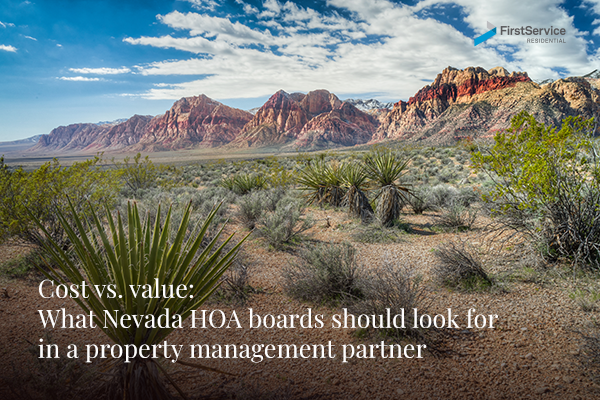
Cost vs. value: What Nevada HOA boards should look for in a management partnerSimilar pricing doesn't always lead to similar results. This article explores four areas that can help boards evaluate the value behind a proposal: pricing clarity, manager workload, local leadership access and reliable financial reporting.
Article 2
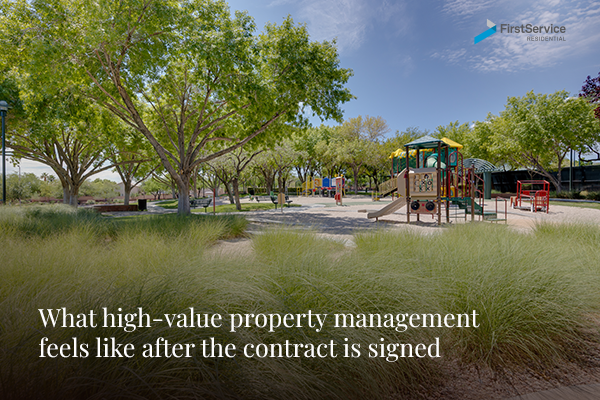
What high-value management feels like after the contract is signedWhat happens once the work begins? This article explores five signals that can help boards recognize a service model built for consistency and stability, including continuity, financial reporting, local leadership access, resident support and a structured transition plan.
Why this series matters for your board
The true value of community management isn't always apparent in a proposal. It becomes clearer over time, through the consistency of day-to-day operations, the reliability of financial information, the support available when challenges arise and the amount of time the board can spend leading rather than repeatedly troubleshooting.Throughout this series, we've explored both sides of the value equation: what boards should consider before selecting a management partner and what they should expect once that partnership is underway. While every Nevada community has different priorities, looking beyond price can help boards better understand whether a management model has the depth and support to meet the community's needs over time.
If your board is evaluating its current management relationship or considering a new partner, we welcome the opportunity to continue the conversation about what meaningful value could look like for your community.
Start a conversation