Tuesday June 16, 2026
What is the Good Neighbor Fence Law?
The Good Neighbor Fence Law in California says adjoining landowners are generally presumed to receive equal benefit from a boundary fence and are generally expected to share reasonable construction, maintenance, or necessary replacement costs. A landowner seeking contribution must give the adjoining landowner at least 30 days’ written notice before incurring costs for the fence work (Cal. Civ. Code § 841).Residents should not assume this law automatically requires a neighbor to pay half of every fence project, because the facts, the fence location, HOA governing documents, and the reasonableness of the proposed work can affect responsibility.
What it means for HOAs and community associations
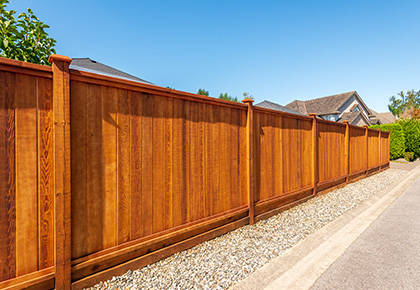 For HOAs, the Good Neighbor Fence Law in California can matter when a fence sits on a boundary between two separately owned lots, or between association property and a private neighboring owner’s property.
Boards should also work with their HOA manager and legal counsel to review their CC&Rs, architectural guidelines, maintenance responsibility charts, and plats before assuming who owns or must maintain a fence.
When does the Good Neighbor Fence Law apply?
The Good Neighbor Fence Law in California generally applies to fences that divide adjoining properties. It is most relevant when both sides benefit from the fence and one owner wants the other to contribute to reasonable costs. It may not answer every HOA fencing question, especially when the fence is fully inside one lot, part of common area, or controlled by the governing documents.The 30-day written notice requirement
Under the Good Neighbor Fence Law in California, a landowner seeking cost contribution must provide at least 30 days’ written notice before incurring costs for fence construction, maintenance, or necessary replacement. The notice must include:- Notice of the presumption of equal responsibility for reasonable costs
- The proposed work
- The problem being addressed
- The estimated cost
- The proposed cost split
- The proposed timeline
Do neighbors always split fence costs 50/50?
Not always. The law creates a presumption that adjoining landowners share equal benefit and equal responsibility, but that presumption can be challenged. A court may decide equal sharing would be unjust based on factors such as financial burden, the cost compared with the benefit, the reasonableness of the project, or other equitable factors the court considers appropriate.HOA fence rules and architectural approval
Even if the Good Neighbor Fence Law in California applies, your HOA rules may still require architectural approval from the association before repairing, replacing, or changing a fence. If a California association requires approval for exterior changes, the review process must be fair, reasonable, and expeditious, and decisions must be made in good faith and may not be “unreasonable, arbitrary, or capricious” (Cal. Civ. Code § 4765).What is a spite fence in California?
California HOA law also addresses “spite fences.” A fence or other structure in the nature of a fence that unnecessarily exceeds 10 feet in height and is maliciously erected or maintained to annoy the adjoining owner or occupant is considered a private nuisance (Cal. Civ. Code § 841.4).Tips for boards and HOA residents
-
Start with the governing documents
Before planning fence work, both board members and residents should check the CC&Rs, architectural guidelines, rules, and maintenance responsibilities. These documents may explain fence height, materials, colors, locations, approval steps, and who maintains what.
-
Confirm the fence location
Fence responsibilities can depend on whether the fence is on a property line, inside one owner’s lot, on common area, or next to association-maintained property. Residents should avoid assuming a fence is shared just because it separates two yards. Boards should avoid assuming the association is responsible without checking maps, plats, records, or professional input.
-
Talk before the project starts
Many fence disputes can be avoided with early communication. Boards should encourage owners to communicate respectfully and submit architectural applications early. A short conversation can help clarify timing, cost expectations, access needs, and whether both sides agree on the scope.
-
Put cost-sharing details in writing
If residents expect a neighbor to share costs, the details should be in writing before costs are incurred. Written communication helps reduce misunderstandings and supports the notice process under the Good Neighbor Fence Law in California.
-
Get approval before changing the fence
Residents should not replace, raise, paint, or move a fence without checking whether HOA approval is required. Boards should make the application process easy to understand and apply standards consistently. Even when neighbors agree on cost sharing, the project may still need architectural approval before work begins.
-
Keep the project reasonable
The Good Neighbor Fence Law in California focuses on reasonable costs, so both residents and boards should be careful with project scope. A basic repair, full replacement, upgraded material, or decorative change may lead to different cost expectations. If one side wants a more expensive option, document who agreed to pay for the upgrade.
-
Save records from start to finish
Fence projects can create questions months or years later. Residents and boards should keep notices, emails, photos, estimates, approvals, invoices, permits, and payment records. Good documentation helps explain what was approved, who agreed to pay, whether the 30-day notice was provided, and how the final decision was made.
About FirstService Residential
FirstService Residential supports California communities with local expertise backed by national resources. For more than 40 years, our dedicated teams have helped boards stay organized with governance support, recordkeeping systems, financial management, vendor coordination, banking and insurance programs, resident communication, and 24/7 customer care.We help boards apply consistent processes that align with their governing documents and California law, so board members can stay focused on long-term community goals instead of day-to-day administration.
Contact a member of our team today to learn more.
This information is provided for general informational purposes only and is not intended to constitute, and should not be relied upon as, legal, regulatory, financial, or operational advice, or as a representation or guarantee of any specific services, capabilities, or outcomes. Property management needs, regulatory requirements, market conditions, and available services vary by jurisdiction, property type, and community. FirstService Residential provides services through locally based affiliates and associates, and services and results may vary by community, region, contractual terms, and applicable law.