Monday March 23, 2026
What is a 1031 exchange?
A 1031 exchange is a federal tax rule that lets you sell investment or business real estate and buy other qualifying real estate without paying federal tax right away. Instead, the tax is deferred, as long as you follow IRS rules under IRC §1031.What is “real property”?
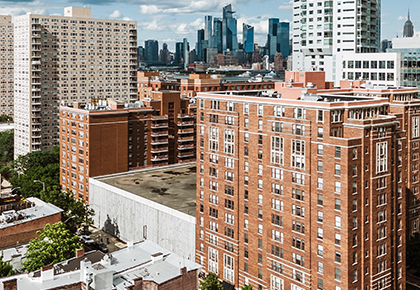 Real property is land and the permanent things attached to it, like a building, a rental home, or other improvements that are part of the land.
Section 1031 only applies to exchanges of real property, not personal property like equipment, furniture, or vehicles.
Does a 1031 exchange defer state tax too?
In many cases, yes. If your 1031 exchange is valid under federal rules, the gain is generally not taxed by New Jersey at the time of the exchange. But if you walk away with any cash or have debt wiped out as part of the exchange, New Jersey can generally tax that piece right away.Additionally, if you later sell without doing another 1031 exchange, the deferred gain is generally taxed then.
Key requirements for a 1031 exchange
The property must qualify
Both the property being sold and the one being purchased must be held for business or investment purposes. A primary residence does not fit within the rules.A qualified intermediary must hold the funds
The investor cannot receive or control the sale proceeds. A qualified intermediary (QI) holds the money between the sale and the purchase. If the investor touches the funds, the exchange is usually invalid.The 45-day deadline to identify replacement property
Within 45 days after the property is transferred, the investor must formally identify potential properties they may buy. The list must be in writing and follow IRS identification rules. Investors are commonly allowed to identify up to three possible replacement properties under the standard identification rule.The 180-day timeline to complete the purchase
The replacement property must be purchased within 180 days of the sale of the original property, or by the due date of the investor’s tax return for that year (including extensions), whichever comes first. The 45-day and 180-day windows run at the same time, not one after the other.Matching the replacement property to the identification list
The investor must purchase a property that appeared on their written identification list. Changing or adding properties after the 45-day deadline is generally not allowed.Documentation needed for a valid exchange
The exchange agreement, identification notices, closing statements, and intermediary documents need to fit IRS rules. A tax professional usually helps confirm that the paperwork supports the exchange.The 200% rule
The 200% rule can allow an investor to list more than three possible replacement properties as long as the combined value of those properties is no more than twice the value of the property that was sold. This rule is helpful when you want extra options or are looking at several smaller properties, as long as the total value stays within the allowed limit.Realty transfer fees
A 1031 exchange can help defer income taxes, but it doesn’t make the closing “fee-free.” In New Jersey, deals often still include realty transfer fees and county recording fees when the deed is recorded.Who cannot be a QI?
Your QI cannot be anyone who served as your employee, attorney, accountant, investment banker/broker, or real estate agent/broker at any time in the two years before you transfer your relinquished property, except for limited routine title, escrow, or banking-type services. This matters because a 1031 exchange generally fails if you or someone acting as your agent can access the money before the replacement purchase closes.Can you do a 1031 exchange without a QI?
A qualified intermediary is the most common setup, but it’s not the only option. The IRS also allows for a qualified escrow account or a qualified trust, as long as the agreement blocks you from accessing the sale proceeds before the exchange is done.1031 exchanges in community associations
1031 exchanges in HOAs and condo associations are generally the same as 1031 exchanges for stand-alone homes. However, HOA and condo purchases often require extra steps such as reviews of resale documents, questionnaires, transfer fees, and any rental restrictions. These steps can add time, so buyers should plan ahead to meet the 45-day identification deadline and the 180-day closing deadline.Lower-value property exchanges (“boot”)
If the replacement property costs less than the one you sold, or if you keep part of the sale proceeds, the leftover amount may be taxable. This is often called the “boot.” Boot can also come from credits or non-real estate items on the closing statement. Because small details can change the tax result, most investors have their qualified intermediary and CPA review the figures before the exchange closes.Reverse exchanges when you need to buy first
A reverse 1031 exchange is used when you need to buy the replacement property before you can sell your current one. Because you generally can’t take title to the new property first under standard 1031 rules, the process uses a temporary “parking” arrangement. A simple way to understand it is through the core steps:- You find the replacement property first.
You want to move quickly, but you have not yet sold your current property.
- A parking entity takes temporary title.
Your exchange team, working with your qualified intermediary, arranges for the new property to be held by a special-purpose entity instead of you.
- You sell your current property.
Once the sale closes, the proceeds move through the qualified intermediary, just like a standard exchange.
- The parked property is transferred to you.
After your sale closes, the replacement property moves from the parking entity to you, completing the exchange.
- Everything must fit within the 45/180-day windows.
Timing is strict, so early coordination with your tax advisor and exchange professionals is important.
About FirstService Residential
As North America’s leading property management company, FirstService Residential serves New Jersey boards and owners with local expertise backed by national resources. Our teams offer support with meetings, recordkeeping, financial management, banking and insurance programs, resident communication, and 24/7 customer care teams. This way, board members can focus on long-term goals instead of day-to-day administration.With more than 25 years of experience in New Jersey, we help HOAs, condo associations, high-rises, and master-planned communities operate smoothly and meet their goals with confidence. To learn how we can support your association, contact our New Jersey team today.
This information is provided for general informational purposes only and is not intended to constitute, and should not be relied upon as, legal, regulatory, financial, or operational advice, or as a representation or guarantee of any specific services, capabilities, or outcomes. Property management needs, regulatory requirements, market conditions, and available services vary by jurisdiction, property type, and community. FirstService Residential provides services through locally based affiliates and associates, and services and results may vary by community, region, contractual terms, and applicable law.