Wednesday August 27, 2025
Can you install solar panels in a Missouri HOA?
Homeowners in Missouri who live in a homeowners association (HOA) generally have the right to install solar panels on the rooftops of homes. Missouri HOA laws prohibit boards from outright banning rooftop solar energy systems on homeowner-owned/controlled rooftops. That said, HOAs can still adopt reasonable guidelines about placement. These rules cannot prevent installation of the system, impair its functioning, restrict its use, or adversely affect its cost or efficiency. If you’re considering adding HOA solar panels to your property, it’s important to know both your rights under Missouri law and your responsibilities under your community’s governing documents.This article is not intended to and does not constitute legal advice or create an attorney-client relationship. Board members should consult their association’s attorney to discuss the legal implications of their decisions or actions prior to proceeding.
Senate Bill 820
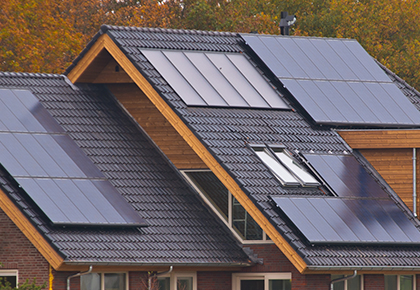 Senate Bill 820, codified as RSMo § 442.404, took effect in Missouri on January 1, 2023 and changed how HOAs handle solar energy installations. Before this law, many HOA governing documents included restrictions that made installing solar panels difficult or impossible. Now, HOAs may not create or enforce rules that prohibit solar panel installation on rooftops that are owned, controlled, and maintained by the homeowner.
Key provisions of Senate Bill 820/RSMo § 442.404 include:
- HOAs cannot ban solar panels outright on qualifying homeowner-owned rooftops.
- HOAs may set reasonable restrictions related to placement.
- Any restrictions must not prevent installation, impair functioning, restrict use, or adversely affect cost or efficiency.
- The protections apply only to rooftops, and do not extend to ground-mounted systems or common/association-owned roofs.
- The law does not apply to condominium associations or residential cooperatives.
HOA approval/ARC requests
Even though Missouri law gives homeowners the right to install solar panels, most HOAs still require an approval process through their Architectural Review Committee (ARC) or a similar body. This process is meant to confirm that the installation meets community guidelines and complies with local ordinances.When submitting an ARC request for HOA solar panels, homeowners should be ready to include:
- A detailed site plan showing panel placement
- Manufacturer specifications and technical data
- Photos or renderings of the proposed installation
- Information on the installer’s licensing and insurance
- A proposed installation timeline
How boards can approach solar panel requests
For HOA boards, RSMo § 442.404 shifts the conversation from whether solar panels can be installed to how they can be integrated into the community. A thoughtful approach starts with reviewing your governing documents and removing any outdated restrictions that no longer align with state law. Boards can then work with their ARC to create a clear application process, ideally with a checklist that covers placement guidelines, timelines, and other expectations.It’s also helpful to consult a solar energy professional to understand technical limitations and potential impacts on the property. Setting reasonable timelines for application review lets homeowners know what to expect, and sharing information about both the law and the community’s process can build understanding. With clear guidelines and effective communication, boards can handle solar panel requests in a way that supports both compliance and the community’s aesthetic goals.
Reasonable restrictions vs. prohibited restrictions
Under Missouri’s HOA solar panel law, the key word is “reasonable.” Boards can regulate certain aspects of an installation, but those rules must be consistent with the law’s limits.Examples of potentially reasonable restrictions might include:
- Installers must hold required licenses/registrations
- Limits on work hours, staging areas, safety, and debris removal during installation
- Asking for wiring to be concealed where possible
- Requiring placement on a north-facing roof when a south-facing roof is available and more efficient
- Demanding changes that impair the system’s performance
- Adding conditions that adversely affect the cost of the installation
Responsibilities for homeowners
While Missouri law protects a homeowner’s right to install solar panels, it does not eliminate the need to follow HOA procedures or comply with other applicable rules.Homeowners should:
- Submit a complete ARC request before starting work
- Work with licensed and insured solar contractors
- Verify that the installation complies with municipal building codes
- Maintain the solar equipment in good condition over time
- Notify the HOA if repairs or replacements will significantly alter the original approved design
Common misconceptions about HOA solar panels in Missouri
“I can install my panels without telling the HOA.”Correction: HOAs can require an application process and reasonable placement standards.
“This law applies to condos too.”
Correction: The statute does not apply to condominium associations or co-ops.
“Reasonable restrictions” means the HOA can change anything it wants.”
Correction: Restrictions must not prevent installation, impair functioning, restrict use, or adversely affect cost or efficiency.
“I don’t need permits because the HOA approved it.”
Correction: HOA approval doesn’t replace municipal permits or utility interconnection. Installations must still meet code and utility requirements.
“HOA approval is automatic if they don’t respond in 30 days.”
Correction: RSMo § 442.404 sets no decision deadline. Any “deemed approved” rule would come from your governing documents, not the statute.
“This law covers ground-mounted systems too.”
Correction: No, the protection applies to rooftop solar installations only, and only on rooftops owned/controlled/maintained by the homeowner.