Thursday March 26, 2026
What is the South Carolina Homeowners Association Act?
The South Carolina Homeowners Association Act is a state law that establishes baseline rules and protections for homeowners associations (HOAs) and their members in South Carolina.It covers topics like recording requirements, certain board meeting notice requirements, and limited document access rules. The law is found in Title 27, Chapter 30, Article 1 of the South Carolina Code of Laws.
Key provisions HOAs should know
What counts as an HOA under the Act
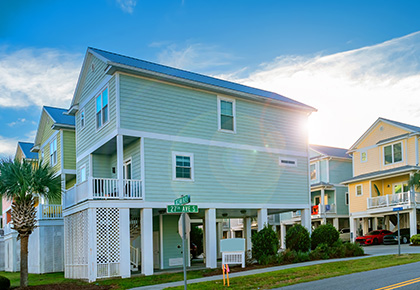 Under the Act, an HOA is an entity developed to manage and maintain a planned community or horizontal property regime where the declaration requires owners, by virtue of ownership, to pay assessments for common expenses like insurance, maintenance, real estate taxes, or other common expenses.
Governing documents
The “governing documents” under the Act are defined as the “declaration, master deeds, or bylaws, or any amendments to the declaration, master deeds, or bylaws.” Boards and homeowners must follow these documents, and the board should not selectively enforce them.Magistrates court can hear certain monetary disputes
The Act allows magistrates court to handle certain HOA disputes involving money if the case fits within the court’s dollar limits. This gives owners and associations a lower-cost option for resolving smaller financial issues arising under the Act. Boards and homeowners may speak with their attorneys to confirm whether a dispute qualifies.Defined terms under the Act
The South Carolina Homeowners Association Act includes a short definitions section so everyone is using the same language. Here are the key terms it defines:- Board: the group named in the governing documents to act for and govern the HOA.
- Declarant: the developer (or group acting together) that creates the community and sells units, or keeps special developer rights under the documents.
- Declaration: the recorded document (and amendments) that creates the HOA.
- Governing documents: the declaration, master deeds, or bylaws (and amendments to them).
- Homeowner: the unit owner (including the declarant if they own units), not a lender holding a mortgage.
- Homeowners association: the entity that manages a planned community or horizontal property regime where the declaration requires owners to pay assessments for common expenses.
- HOA management company: a business that manages HOAs.
- Unit: a lot in a subdivision or an apartment in a horizontal property regime.
Recording governing documents
The Act says that, to be enforceable, an HOA’s governing documents must be recorded in the county where the property is located (through the clerk of court, RMC, or register of deeds, depending on the county). If key documents aren’t properly recorded, enforcing them can become a problem.Recording rules by January 10
Even though rules can take effect when adopted, the Act ties ongoing enforceability to recording. To remain enforceable, rules, regulations, and rule amendments must be recorded in the county by January 10 of each year following their adoption or amendment.Title 33 nonprofits are treated differently
Some HOAs are incorporated under South Carolina’s Nonprofit Corporation Act (Title 33, Chapter 31). The Homeowners Association Act specifically says a few provisions work differently for those HOAs, so it’s worth knowing your status. Your HOA can usually confirm this from its corporate filings or articles of incorporation.Document inspections
For HOAs not covered by South Carolina’s Nonprofit Corporation Act, the Homeowners Association Act applies “access to documents” rules for a narrow purpose: giving homeowners the right to inspect and copy the HOA’s annual budget and homeowners membership lists.Meeting notice for budget increases
S.C. Code Ann. § 27-30-140 says that before an HOA takes action to increase an annual budget in any single year, it must provide notice to homeowners at least 48 hours before the meeting where the decision is made. This specific notice rule does not apply to HOAs incorporated under the South Carolina Nonprofit Corporation Act.Compliance tips for boards
Boards that focus on clear processes and consistent communication tend to avoid many of the disputes that lead to complaints or legal questions. The following practices support smoother daily operations and help homeowners understand how decisions are made:- Create predictable procedures: Establish steady routines for board meetings and owner communication. A consistent schedule helps homeowners know when business is handled and reduces confusion.
- Confirm document access: Make governing documents, minutes, and policies easy for owners to request. Readily available materials help reduce misunderstandings and build confidence in how the community operates.
- Use organized recordkeeping: Keep digital and physical records in one organized system so board members can quickly find past decisions and adopted rules. Strong records also help new board members get up to speed.
- Adopt clear communication practices: When the board makes a decision, share it in straightforward language and explain when the change takes effect. Many disputes arise from uncertainty.
- Review policies regularly: Set aside time during the year to review rules and procedures for clarity and consistency with governing documents. Small adjustments can prevent larger issues later.
- Work closely with your manager and attorney: Ask your management team to help prepare notices, track administrative deadlines, organize files, and support meetings. When legal questions arise, reach out to the association attorney for guidance.
- Stay accessible to homeowners: Provide a reliable way for owners to submit questions or concerns. Timely responses help residents feel heard and give the board early visibility into potential issues.
About FirstService Residential
As North America’s leading property management company, FirstService Residential serves South Carolina HOAs with local expertise backed by national resources. Our teams support board members with meetings, recordkeeping, financial management, resident communication, and 24/7 customer care. This way, board members can focus on long-term goals instead of day-to-day administration.Contact a member of our team today to learn more about how we can serve your community.
This information is provided for general informational purposes only and is not intended to constitute, and should not be relied upon as, legal, regulatory, financial, or operational advice, or as a representation or guarantee of any specific services, capabilities, or outcomes. Property management needs, regulatory requirements, market conditions, and available services vary by jurisdiction, property type, and community. FirstService Residential provides services through locally based affiliates and associates, and services and results may vary by community, region, contractual terms, and applicable law.