Wednesday December 03, 2025
This article is not intended to and does not constitute legal advice or create an attorney-client relationship. Board members and owners should consult their attorneys to discuss the legal implications of their decisions or actions prior to proceeding.What is building security?
Building security refers to the systems, policies, and people that protect your residents and property. It can include physical measures, like gates and locks, and digital tools, like key-card access systems or camera networks. In Rhode Island, building security is especially important for rental properties and community associations where residents share entrances, parking areas, and amenities.Effective building security focuses on prevention, visibility, and clear communication. When access points are well-controlled and procedures are followed consistently, the risk of theft, vandalism, and safety incidents drops significantly. Good security is part of maintaining property values and resident confidence.
Building security tips
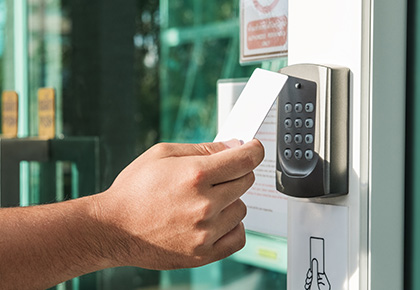 Even if you think the security at your building is adequate, remember that criminals are opportunistic and resourceful, so it’s a good idea to continually evaluate it to keep your building safe. Consider these suggestions to improve the security at your property.
- Control access points: Every entry should be locked or monitored, including doors leading from garages or back corridors. Key-card or fob access systems make it easy to track entries and quickly deactivate lost credentials.
- Maintain good lighting: Well-lit entrances, hallways, and parking areas reduce hiding spots and increase visibility. Replace burned-out bulbs promptly and consider motion-activated lighting in less-traveled spaces. Good lighting alone can deter many security incidents.
- Review systems regularly: Audit all key fobs and security cards assigned to residents on a regular basis. Cancel those that are no longer valid.
- Secure mail and package areas: Package theft is a growing concern in multi-unit buildings. Dedicated mailrooms or smart package lockers reduce the risk. Staff or delivery partners should have clear instructions on where deliveries are accepted and stored.
- Remove storage signs: A sign that says “bicycle storage” is an invitation to a thief to help himself.
- Train staff and residents: Education is a major part of building security. Staff and residents should know how to identify suspicious activity, report issues, and use access systems correctly. Quick reminders in newsletters or at annual meetings go a long way toward keeping everyone alert.
- Cover windows: Criminals are less likely to force entry when they can’t see what is inside. Frost or otherwise block lower-level windows.
- Disclose: Communicate with residents about criminal activity on the property and in the neighborhood. Crime can be reduced when people are informed and alert.
- Review and test emergency procedures: Security isn’t just about preventing unauthorized entry — it’s also about knowing how to respond when something goes wrong. Fire alarms, evacuation routes, and emergency communication systems should be reviewed and tested regularly.
- Don’t hold or open the door for strangers: Most of us don’t want to be rude, so we often feel we should let a person into the building who is waiting outside. The person waiting at the security door might look harmless, but looks can be deceiving. As difficult as it is, you should never let someone you don’t know into the building. Every resident is responsible for the security of the building and must be firm about keeping strangers out. If you are asked to buzz someone in, simply say, “I’m sorry, I cannot let you in because I don’t know you. Please contact the person you are here to visit,” and walk away. If you feel threatened or are harassed, call the police.
Conducting a building security audit
A regular security audit is one of the most effective ways to identify weak points in your property’s protection plan. A building security audit reviews every system, process, and policy, from locks and cameras to lighting and access procedures.Start by walking the property during the day and again after dark. Check that exterior doors close securely, cameras cover all entrances, and lighting is consistent throughout parking areas and pathways. Review how visitor access is managed and whether vendors or delivery staff are following building procedures.
Next, look at documentation. Are access fobs tracked? Are maintenance logs for security equipment up to date? These details show whether procedures are being followed consistently. Partnering with your property manager adds value here. They can help create a checklist, prioritize issues, and schedule follow-ups. Regular audits make building security measurable and help plan cost-effective improvements.
Responding effectively to security incidents
Even with good planning, incidents can happen. How management responds can make all the difference. Every building should have a clear plan for reporting, documenting, and following up on building security issues.Start by making reporting easy. Residents should know who to call or email when they see something suspicious, and staff should have a process for logging details such as the time, location, and nature of the issue. This documentation helps property managers track patterns and share relevant updates with the board members, owners, or local authorities.
After an incident, communicate promptly and professionally with residents, focusing on facts and next steps. If surveillance footage or vendor reports are involved, the property manager can coordinate retrieval and follow-up. A consistent, professional response helps prevent repeat incidents and shows residents that building security is a shared priority backed by structure and accountability, not just equipment or policies.
How a property management company can help
A professional property management company like FirstService Residential can play a vital role in maintaining building security in Rhode Island. Managers can help coordinate access control, oversee security staff, and manage relationships with vendors that maintain alarms, gates, and surveillance systems. They also track and document maintenance schedules, so equipment repairs and upgrades meet both building policies and local regulations.At FirstService Residential, we work with boards, developers, and owners to support every aspect of building operations, from maintenance to financial planning. Contact a member of our team today to learn more.